
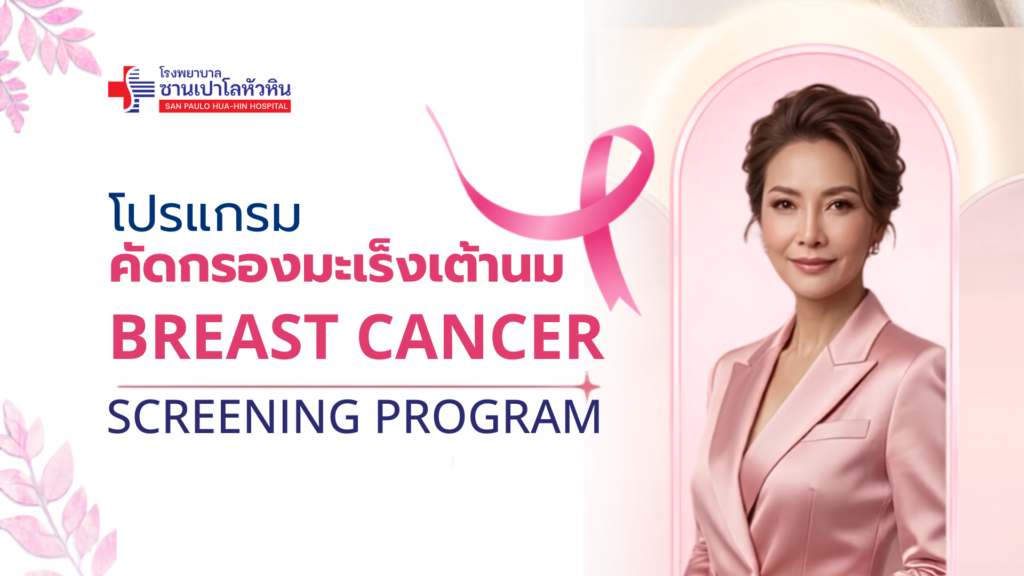
มะเร็งเต้านม: รู้ไว รักษาทัน เพิ่มโอกาสหายขาดได้เกิน 90%
มะเร็งเต้านม ยังคงครองแชมป์มะเร็งที่พบเป็นอันดับ 1 ในผู้หญิงทั่วโลกและผู้หญิงไทย แต่ข่าวดีคือ “มะเร็งเต้านม” เป็นหนึ่งในมะเร็งไม่กี่ชนิดที่หากตรวจเจอตั้งแต่ระยะเริ่มต้น (Stage 0-1) มีโอกาสรักษาให้หายขาดได้สูงมาก การมีความรู้ที่ถูกต้องและการหมั่นสังเกตตัวเองจึงเป็นเกราะป้องกันที่ดีที่สุด
1. ใครบ้างที่อยู่ใน “กลุ่มเสี่ยง”?
แม้ว่าผู้หญิงทุกคนจะมีความเสี่ยง แต่ปัจจัยเหล่านี้จะทำให้ความเสี่ยงเพิ่มสูงขึ้น:
- อายุ: ผู้หญิงที่มีอายุ 40 ปีขึ้นไปความเสี่ยงจะเริ่มเพิ่มสูงขึ้น
- พันธุกรรม: มีประวัติคนในครอบครัวสายตรง (แม่ พี่สาว น้องสาว) เป็นมะเร็งเต้านมหรือมะเร็งรังไข่
- ประวัติสุขภาพ: เริ่มมีประจำเดือนเร็ว (ก่อนอายุ 12 ปี) หรือหมดประจำเดือนช้า (หลังอายุ 55 ปี)
- พฤติกรรมการใช้ชีวิต: ภาวะอ้วน ดื่มแอลกอฮอล์ หรือการสูบบุหรี่
2. สัญญาณเตือน…อย่ารอให้เจ็บแล้วค่อยมา
มะเร็งเต้านมในระยะแรกมัก “ไม่เจ็บ” หากคุณพบอาการเหล่านี้ควรรีบพบแพทย์ทันที:
- คลำพบก้อนเนื้อบริเวณเต้านมหรือรักแร้
- รูปร่างหรือขนาดของเต้านมเปลี่ยนแปลงไปจากเดิม
- ผิวหนังบริเวณเต้านมบุ๋มลงไปคล้ายผิวส้ม หรือมีรอยแดงหนาผิดปกติ
- หัวนมบุ๋ม หรือมีของเหลวที่ไม่ใช่น้ำนมไหลออกมา (เช่น เลือด)
- มีอาการปวดหรือเจ็บที่เต้านมผิดปกติ (แม้จะพบน้อยในระยะแรก)
3. การตรวจคัดกรอง: กุญแจสู่การรักษาสิ่งที่ดีที่สุด
การคลำด้วยตัวเองอาจไม่เพียงพอ เพราะก้อนเนื้อที่คลำได้มักจะมีขนาดเกิน 1-2 ซม. ไปแล้ว ปัจจุบันโรงพยาบาลมีเทคโนโลยีที่แม่นยำกว่า:
- Digital Mammogram: สามารถตรวจพบหินปูนหรือก้อนเนื้อขนาดเล็กมากที่มือคลำไม่พบ
- Breast Ultrasound: ช่วยจำแนกได้ว่าเป็นก้อนเนื้อแข็งหรือเป็นเพียงถุงน้ำ (Cyst)
- Biopsy: การเจาะเก็บตัวอย่างชิ้นเนื้อเพื่อความแน่นอนในการวินิจฉัย
4. เคล็ดลับการดูแลตัวเอง
- คลำเต้านมด้วยตัวเอง: อย่างน้อยเดือนละ 1 ครั้ง (หลังหมดประจำเดือน 7-10 วัน)
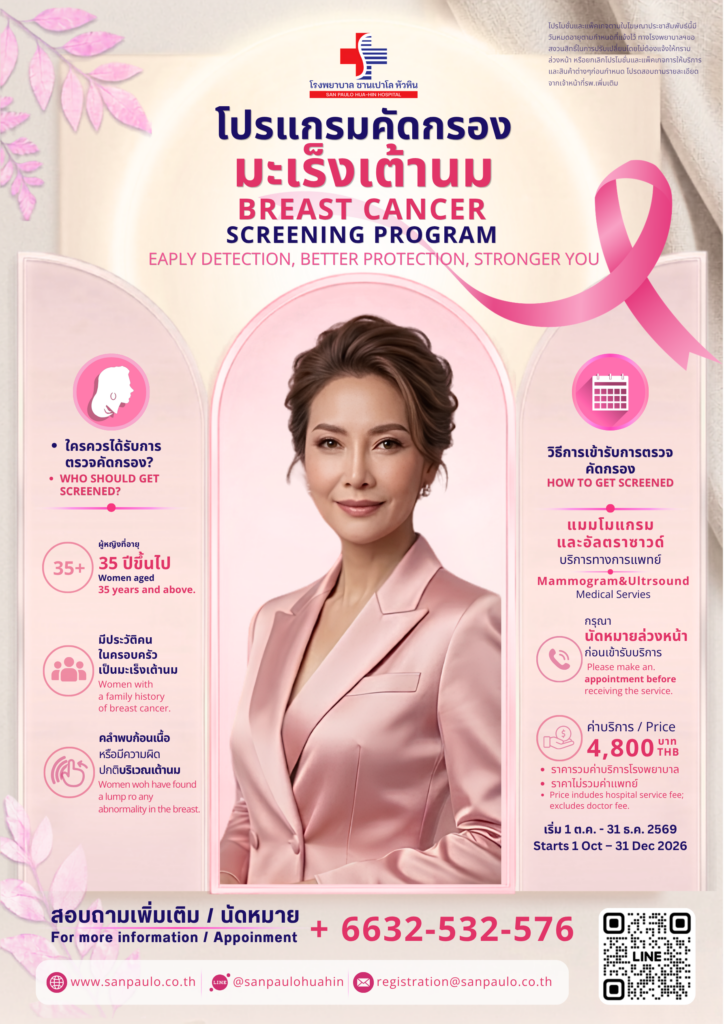
- ตรวจสุขภาพประจำปี: ผู้หญิงอายุ 35 ปีขึ้นไปควรเริ่มปรึกษาแพทย์เพื่อประเมินความเสี่ยง
- Mammogram ประจำปี: สำหรับผู้หญิงอายุ 40 ปีขึ้นไป ควรทำเป็นประจำทุก 1-2 ปี
Breast Cancer: Early Detection, Timely Treatment, Increases Chance of Complete Cure to Over 90%
Early Detection, Timely Treatment, Increases Chance of Complete Cure to Over 90%
Breast cancer is the number one threat to women’s health worldwide. However, if detected in its early stages, the chances of a complete cure are as high as 90%. Being aware of the importance of screening for abnormalities is crucial for effective prevention and treatment. Let’s delve deep into understanding breast cancer together, from basic knowledge to the essential nature of early detection.
What is Breast Cancer?
Breast cancer begins when cells in the breast divide abnormally and out of control, eventually forming a tumor. This cancer can spread to other organs if not treated promptly. It can occur in both women and men, though the incidence in men is significantly lower.
Important Risk Factors You Should Know
Although the exact cause of breast cancer is not yet fully understood, there are several factors that can increase the risk:
Age: The risk increases with age, especially for women over 35.
Genetics: Having a direct family member (mother, sister, or daughter) with a history of breast cancer.
Hormones: Starting menstruation before age 12, reaching menopause after age 55, or long-term hormone replacement therapy.
Lifestyle: Regular alcohol consumption, obesity, lack of exercise, and smoking.
Warning Signs Not to Be Ignored
Breast cancer in its early stages often has no symptoms. However, you should see a doctor immediately if you experience the following abnormalities:
A lump or thickening in or near the breast or in the underarm area.
Changes in the size or shape of the breast.
Dimpling, puckering, or redness of the breast skin.
Nipple retraction or a rash on the nipple.
Discharge from the nipple (other than breast milk), especially if it is bloody.
Why is Early Detection Crucial?
Increases Chances of Cure: Breast cancer detected in stage 1 or 2 is highly likely to be completely cured.
Less Invasive Treatment: Patients may not need to have the entire breast removed and may require less intense chemotherapy or radiation.
Reduces Mortality Rate: Screening significantly lowers the mortality rate from breast cancer.
How to Screen for Breast Cancer
Breast Self-Exam (BSE): Perform it regularly once a month, about 7-10 days after your period ends.
Clinical Breast Exam (CBE): An examination by a medical professional.
Digital Mammogram: This is the most effective method for detecting early-stage breast cancer, even before a lump can be felt. It is recommended that women aged 40 and older have a mammogram once a year.
Protect yourself and your loved ones with the “Breast Cancer Screening Program” at San Paulo Hua-Hin Hospital.
EARLY DETECTION, BETTER PROTECTION, STRONGER YOU.